Seven steps for dealing with overwhelming stress

In our busy western lives stress can often become a problem. Sometimes there are so many things happening that we become overwhelmed. This is when our stress hormones really kick in and we find it hard to cope with the many demands. I have written about dealing with stress in my book Holistic Medicine but here are seven simple steps to follow when you find yourself overwhelmed and stressed out.


  1. Recognise that you are under stress. Sometimes we are so busy and overwhelmed by our lives that we don’t even realise that we are under stress. It helps for us to step back for a moment and take some deep breaths. We can pause for a few moments and just pay attention to the fact that our lives have become too full.
  2. Ground yourself. When we are overwhelmed we lose touch with our self and pay too much attention to what is going on around us. The process of grounding starts to bring us back to our selves. Grounding can be as simple as going for a walk outside (bare feet is best), doing some grounding yoga poses or lying on the earth.
  3. Focus on simple things that you can do. When we are overwhelmed with so many things going on in our life we need to focus on those things that will make a difference to our level of stress. What can we do to make a difference in the short term?
  4. Ask for help. Sometimes we try to do everything by ourselves. It is good when we are overwhelmed to ask for help from our family and friends. We can let them know things are overwhelming and that we need some help.
  5. Centre yourself. This is a process of paying attention to our heart centre. We can tap into our inner self and pay attention to the calming effect the heart centre can have on our whole self. Our intuition may help guide us to how to deal with the stress and how to prioritise our time.
  6. Pay attention to what being overwhelmed is telling you about your life. Most of us do too much and we forget to take care of ourselves. Stress shows us that we are not looking after our own needs very well.
  7. Let go. We may need to let go of the need to control everything in our lives. We may need to let go of doing so many things and being so busy. If we can let go of our busyness we can make some time in our lives to listen to our own needs better.


We become overwhelmed and stressed when we don’t listen to ourselves and forget to pay attention to our own needs. These seven steps help us take some time out and begin to listen to what we need in our lives. Our priority should be to simplify out lives and pay better attention to what makes us happy.


Disclaimer. This web site is for research and entertainment purposes only. The information given in this site is not intended to replace a therapeutic practitioner relationship.

Photo from Unsplash by Tim Marshall


Sea Change

Yet another change is on the horizon. I have decided to make the move to Phillip Island, a place I have spent so many wonderful holidays. I’ve got a new job at San Remo Medical Clinic and I start next week – September 7th. I’ll be working there Wednesday, Thursday and Friday to begin with and will keep working at the NIIM clinic in Hawthorn on Tuesdays. I’ll also continue some of my work with RACGP in the medium term.

The change will be a bit challenging because I haven’t done rural General Practice for a while. I’ll have to update my emergency medicine skills and learn to remove fish hooks apparently. I’ll continue to offer Integrative Medicine at both NIIM and San Remo practices but the San Remo practice will be more conventional general practice.

I hope to eventually have more time to spend writing as I haven’t written a blog since March and haven’t updated my website with new information for almost as long. The website is getting more visitors all the time so I hope to increase the amount of information available as soon as possible.


Stress

Stress is a term that is bandied around an awful lot these days but what does it really mean and how does it affect our health?

Stress comes in a number of different guises and it affects our health primarily by putting extra demands on our adrenal glands (although it is much more complex than just the adrenals). The adrenal glands secrete a number of different hormones such as cortisol, DHEA, adrenaline and noradrenaline. Acute stress causes a surge in some of these hormones that puts us into a flight or fight response which is very useful if you are faced with a sabre tooth tiger or other acute stress. Chronic stress,such as most of us face in today’s fast and stimulating society, leads to chronic increases in these stress hormones and this leads to health problems of many sorts. Our adrenals may react by increasing secretion of the stress hormones at the expense of restorative hormones such as DHEA or eventually they may react by decreasing secretion of the stress hormones leading to fatigue and other health issues.

Sometimes we think of stress as only the emotional kind and it is true this is a major source of stress for many people, but we shouldn’t forget the other sources of stress that contribute to our health problems. Stresses can be divided into four main groups – environmental, psychosocial, physiological and biological.

Environmental stressors

  • Pollution – air pollution and contamination of our food supply with pesticides and herbicides puts extra stress on our body. Heavy metal toxicity is a problem for many people. Noise pollution can also be a problem.
  • Radiation – Electromagnetic radiation (EMR) is a major problem in today’s society. We are exposed to millions of times more EMR than our grandparents and the effects on our  cells can be severe. We are also exposed to more ionising radiation than ever before with the increase in X-rays and air flights.
  • Weather – weather extremes put our bodies under stress and with climate change these weather extremes are becoming more common.

Psychosocial stressors

These are the emotional type stressors that we all think of as affecting our health. In today’s fast paced society there is increased performance stress in schools and work places. The constant pressure we put ourselves under can lead to adrenal exhaustion and burnout. Many of us also face financial pressures, relationship pressures and anxieties about the future.

Physiological stressors

  • Ageing – as we age our bodies have to cope with the accumulation of many years of ongoing stress of all sorts. Our cells age and the powerhouse of the cell – the mitochondria – decrease in number. Ageing puts at us increased risk of infections and degenerative diseases both of which contribute to increase stress on the whole body.
  • Illness – any illness puts extra stress on the body. Something as simple as a cold will increase the stress response. Chronic disease causes even more stress with both physical and emotional components.
  • Trauma – physical trauma is an obvious stress but emotional traumas can take a larger toll. Grief is a major stress with increases in many health problems in the first year following the death of a loved one.
  • Nutritional deficiencies – our poor diet and poor farming practices have led to an epidemic of obesity and deficiencies in many nutrients. If we don’t have the basic building blocks for our cells to work with then there is physiological stress at a cellular level.

Biological stressors

The main biological stressors are infections; all infections put stress on the body but there are some chronic infections that can affect us profoundly. Viruses, bacteria and parasites can all be to blame. The Epstein Barr virus (EBV), the cytomegalovirus (CMV), the hepatitis virus, the herpes virus and others have all been implicated in chronic diseases. Bacterial infections such as Lyme disease are now thought to be a major cause of chronic ill health.With the increase in overseas travel many people are exposed to bacteria and parasites that cause an increase burden of disease.

With all these stressors it is amazing that the human body works as well as it does and that for the most part good health is the norm. But with all these stressors affecting our body and our adrenals we do need to look after ourselves as well as we can. The seven key ways to decreasing the effect stress has on our lives are as follows.

  1. Eat a healthy diet. I have discussed this on my website and a good diet is essential in providing the building blocks for the body to replace and restore cells and to manufacture hormones and produce energy.
  2. Get a good night’s sleep. Also discussed on my site – 8-81/2 hours sleep between the hours of 9 pm and 5 am is the most restorative and healing.
  3. Exercise daily – 30 -45 minutes of exercise a day is optimal. Too much exercise can be an additional stress on the body.
  4. Meditation – daily meditation decreases the stress response and calms the sympathetic nervous system.
  5. Relax with family and friends and cultivate community.
  6. Consider nutritional supplements and herbal tonics to help the body cope with stress.
  7. Avoid artificial stimulants. Caffeine, alcohol and other stimulants may provide short term relief from stress but long term they create more problems for the adrenals and the body as a whole.


Disclaimer. This web site is for research and entertainment purposes only. The information given in this site is not intended to replace a therapeutic practitioner relationship.

My five favourite books on health and wellness

The following are my five favourite books about general health and wellness. They are mostly written for the layperson rather than being for a medical audience although health professionals will find them all useful.

Chinese Medicine. The web that has no weaver. By Ted J. Kaptchuk. 

I love this book. It was my first introduction to Chinese medicine many years ago and I found within its pages a new way to look at health and wellness. It explains in relatively simple terms the theory and practice of Chinese medicine, mixing up to date scientific knowledge with ancient oriental principles. It is a very enjoyable read although some of the concepts and theories are hard to grasp on first reading. It is a book to go back to time after time.

chinese medicine


The Body is the Barometer of the Soul. So be your own doctor. By Annette Noontil

This book was originally self-published by Annette many years ago and has become a classic reference tool for people who want to understand the messages from their physical body and their symptoms or illnesses. She shows people how to change their thinking about their symptoms and help heal their illnesses. Annette lists many symptoms and diseases and their deeper meanings. There are other books written in this vein by authors such as Louise Hay and Inna Segal but I think this one is the best.

bodyisbarometer


Good Health in the 21st Century: A family doctor’s unconventional guide. By Carole Hungerford.

This well researched book covers a large amount of information about why we get sick and how we might live healthier lives. Hungerford discusses some of the politics behind health issues and delves into diet and supplements in depth. As well as covering general issues around health she writes in an easy to read way about some specific illnesses and health problems of our time. Another book to keep as a great reference.

images


Awakening Intuition. Using your mind-body network for insight and healing. By Mona Lisa Schulz.

While this may not sound like a book on health it certainly explores the mind body connection and how this affects our health. Schulz explores various methods of accessing our intuitive powers that can make a difference in our lives and improve our health. She also discusses specific body areas and how they might seek our attention through the language of intuition. This is a book about paying attention to both your body and its physical symptoms and to your intuition.

awakening intuition


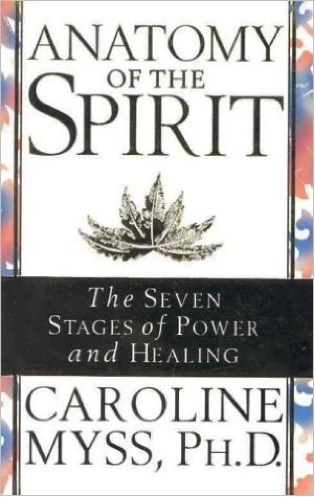
Anatomy of the Spirit. The seven stages of power and healing. By Caroline Myss.

Myss has written a number of books on the human energy system and its application to improving health but I like this one the best. It is based upon many years of research and work in the field of energy medicine and looks at how our illnesses are related to our emotions, beliefs and attitudes. Myss presents her work on the seven centres of spiritual and physical power, which correspond to the chakras, and gives us a blueprint for cultivating our personal power and spiritual growth. This is a book about wellness in its broadest sense of the word.

anatomy of spirit

Wellness

Wellness at its most basic is a feeling we have when we are free of illness and balanced in our body, mind and spirit. How do we go about balancing ourselves better to achieve wellness?

In my first book – Holistic Medicine, beyond the physical – I divide the whole person into five parts in order to investigate how we might find better balance and wholeness..

The first part is the mind (air) and is characterized by the right and left sides of the brain that I have discussed in a previous post called Mind. Many of us are unbalanced in the way we use our mind relying heavily on our left-brain logical thinking and disregarding our right-brain holistic intuitive thinking.

The second part is the physical body (earth). Our physical body is fairly obvious, although many of us try to deny that we have a body that actually needs looking after. We try to use the power of our logical mind to control our body, to make it do what we want. In our culture, we are taught to disregard the messages from our body. We run marathons and compete in sports that stress our bodies and then wonder why our bodies let us down. We feed our bodies a diet of junk (both physical and emotional) and then wonder why they don’t work well.

The third part of our whole self is the emotional body (water) that we are also taught to disregard. We learn early on that some emotions are just not okay and that we should suppress them. We don’t need to act out all our emotions but to not feel them is to ignore one of our parts.

The fourth part is more difficult to classify but is represented by the element of fire. At its simplest, fire is the part of us that drives us to grow and create. It is the passion that burns, the creative flame that leads us to great works of art or scientific discoveries. It is the part of us that seeks to grow and expand. Fire is our closest link to the spiritual world. Our intuitive abilities stem from fire, but we experience them through our other elements.

The fifth part or element is represented by ether and is by its very nature ethereal, it is the element that is unworldly, spiritual, immaterial, intangible. This element is very difficult to fully describe but it symbolises the connections between our parts and the connections between us and everything else. It is the energy that is at the basis of all life but it is not simply energy, it is connections. Some would call this etheric element God or The Divine or All That Is. Some would call it the Holy Spirit or the Web of Life or Mother Nature or Gaia. This element is so much a part of everything that we cannot distil it out to discover its nature. We cannot reduce living things to all their parts and call one of these parts ether and expect to then understand what this means. Because ether more than anything is present most in the harmonic combination of the parts.

So here we have the concept of five elements – fire, air, water, earth and ether. Keeping these elements in balance helps lead us back to wellness and wholeness. Western society values fire and has a heavy reliance on left-brain over right-brain. It devalues the emotional body and most of us don’t take good care of our physical body. Many of us are only just becoming aware of the etheric body and its connections to the rest of the universe. So we are all often unbalanced, or living in a society that is unbalanced. Yet despite this, the human system has the uncanny ability to find its own balance and to seek wellness and wholeness.

To focus on our wellness is to firstly become aware that are made up of these five parts and then to nurture each of them. We need to nurture them as a whole rather than as separate parts but conceptualizing them as parts helps us to become aware of which parts we might be neglecting.

I have written a whole book about this but paying better attention to your parts is a vital step in promoting wellness. We can do this by balancing our right and left brain more, by looking after our physical body, by feeling our emotions instead of suppressing them, by following our passions and our intuition and by enhancing our etheric connections. This is a very simplistic version of a quite complex process but it is worth contemplating especially if you are not currently experiencing wellness.